
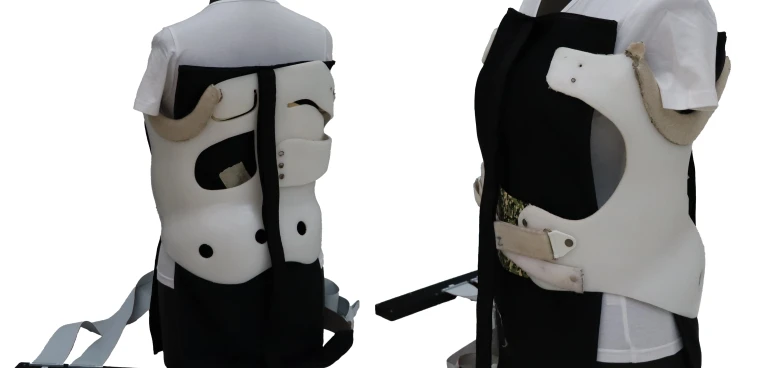

This case study describes the use of pressure sensing technology to enhance clinical training during orthopedic corset examination.
By embedding thin, flexible pressure sensors between the subject and the torso, healthcare providers can quantitatively assess pressure areas while adapting the brace to the patient.
Background
The adaptation of the brace is typically performed through clinical observation and evaluation of the patient’s pathology using a largely subjective approach. Discomfort is assessed based on patient feedback.
A more objective method is therefore necessary to evaluate—also preventively— areas where greater pressure is exerted, which over time may lead to pain or discomfort.
Solution: Sensor-Integrated Tactile Training Models
The solution integrates flexible and conformable pressure sensors between the subject and the torso. The sensor array transmits quantitative data to connected software, which analyzes the measurements and provides objective feedback on high-pressure areas.
By modifying the position and adjustment of the torso, pressure changes can be monitored in real time, enabling clinicians to create a more comfortable and effective fit.
Benefits of Pressure Distribution Sensing in Brace Applications
- Thin, flexible design minimizes interference with movement
- Multiple sensing points ensure precise positioning monitoring
- Quantitative feedback supports objective assessment and skill certification
- Durable and reliable construction enables long-term usability
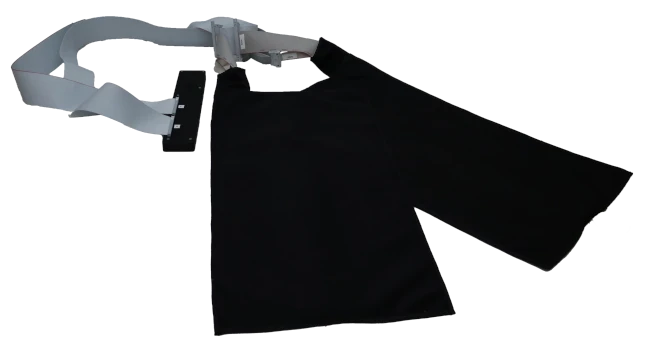
Specifications
| Type of sensor | A type (fabric) |
| Pressure range | 0-5 Psi |
| Number of sensing points | 2304 |

 Made in Italy