
Tactilus Sensors Tecnology

Ensure precision and safety in delicate electronics handling

The system captures real-time data from multiple points, allowing engineers to detect even minimal contact forces that could affect quality or performance. This is critical in electronics manufacturing, where careful handling is required to prevent damage during assembly, testing, or transportation. By analyzing pressure distribution, Tactilus® helps optimize processes, reduce defects, and ensure consistent product quality

Its intuitive software enables engineers to visualize and interpret tactile data, supporting improvements in ergonomics, automation, and handling efficiency. Tactilus® is adaptable to various production environments, from laboratories to high-volume electronics assembly lines, and provides actionable insights that contribute to safer, more reliable devices. 

By combining precision sensing with robust, real-time monitoring, Tactilus® ensures manufacturers can meet the high standards demanded in modern electronics, maintaining both performance and product integrity.  

Electronic applications:

  • Battery Lamination
  • Ball Grid Array (BGA)
  • LCD Bonding
  • Printed Circuit Board
  • Soil-Structure Interaction
  • Solar Cells
  • Spray
  • Ultrasonic Welding
  • Wafer Bonding

Software


OEM projects

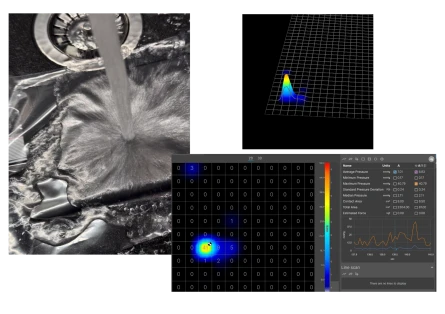
Pressure sensor engineered to accurately measure the impact of water jets on any surface.
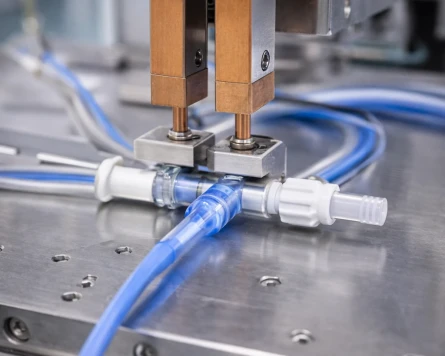
Measure dynamic pressures in resistance or ultrasonic welding processes to ensure precise control and optimal manufacturing performance.
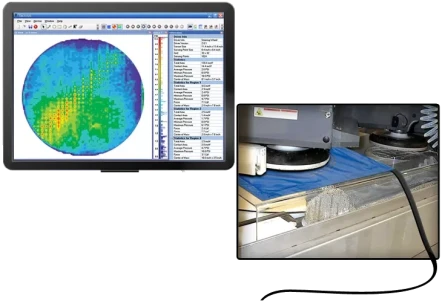
Tactilus® Wafer Polishing Pressure Analysis System

Standard Products

The Tactilus® free form sensor system is a “user constructed” tactile surface pressure system that provides unprecedented flexibility and ease of use. The FreeForm philosophy uses single-point...
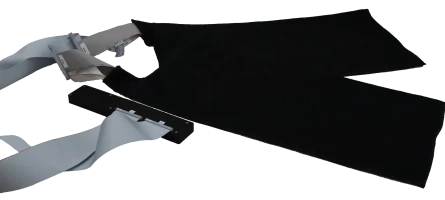
The Tactilus® Back Sensor is a high-precision pressure mapping system engineered to measure real-time pressure distribution between the human body and backrest surfaces in medical and clinical...
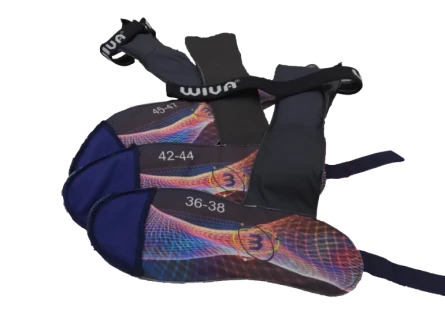
Tactilus® foot insole sensors are the smallest and lightest insole sensors on the market. The battery-operated unit, equipped with a tiny transmitter, allows the user to move up to 30 feet away from...
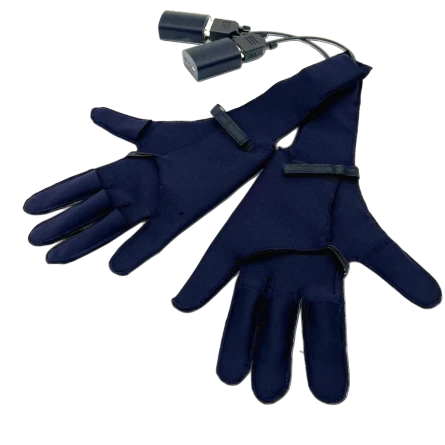
The Gloves system is an advanced tactile sensing solution that combines sensitivity, ergonomics, and cutting-edge technology

Benefits of TACILUS®

  • Highly conformable and elastic sensor
  • True calibration. Now NIST traceable
  • No cumbersome external electronics
  • They’re safely built into the sensor
  • No training required. Hit the ground running
  • Durability like no other sensor
Tactilus EN

FAQ Industrial Application

What is a pressure sensor and pressure mapping system?

A pressure sensor is an electronic device that measures force applied over a defined
area. A pressure mapping system combines one or more pressure sensors with
electronics and dedicated software to measure, visualize, and analyze pressure
distribution between contacting surfaces.

How does a pressure mapping system work?

Thin electronic sensors are positioned between contacting surfaces. When pressure
is applied, the sensors convert mechanical load into electrical signals, which are
processed by software to generate pressure maps and quantitative measurement
data.

What are the main applications of pressure mapping systems?

They are used in component assembly, quality control, machinery maintenance,
product design, packaging, sealing, printing, medical devices, automotive,
aerospace, and more.

What are the key benefits of using electronic pressure measurement systems?

  • Objective and quantitative pressure measurement
  • High accuracy and repeatability
  • Real-time data visualization and recording
  • Digital data storage and reporting
  • Flexible sensor designs for custom applications

Which industries use pressure mapping systems?

Pressure sensors and pressure mapping systems are used across automotive,
aerospace, medical, manufacturing, packaging, electronics, sports science,
ergonomics, and research industries.